
Welcome to the fourth lesson of our Growth Hacking Academy, on how to do growth hacking marketing.
In earlier lessons we explained clearly that growth hacking is an innovative way of doing marketing, centred on business growth and built on experiments and data.
We’ve also covered the profession of the growth hacker (the pirates of marketing) and how to become one…
Today, though, let’s concentrate on how growth hacking marketing is actually done.
Let’s go!
Need a list of growth hacking tools?
Need tools to grow your business?
Want to use growth hacking for your clients and work out which tools are available?
No problem, we’ll give you the full list. FREE!
Request the free growth hacking tool list
What growth hacking marketing means
Growth hacking marketing is doing marketing in an innovative way.
What exactly does that mean?
It means first of all finding the most effective tools and methods for growing a business. The essence of growth hacking marketing is arriving at a strategy that brings the expected results in a short time.
So you’ll see that doing this kind of marketing means moving away from the traditional sort, using social media, virality, web marketing tools, skills and growth hacking tools.
Who is growth hacking marketing for?
Everyone. From sole traders to small businesses, from startups to medium-sized companies and multinationals.
Plenty of people still think growth hacking marketing suits only startups or companies with no budget.
That isn’t so, for two reasons:
- doing growth hacking marketing doesn’t mean zero-cost marketing or marketing on the cheap. Growth hacking takes a budget — the more you have the better. The difference from traditional marketing is that with growth hacking the budget is used efficiently and allocated only to campaigns that bring revenue (that have a positive ROI). And unlike traditional marketing, goals such as brand awareness aren’t considered, because there’s no way to measure the return on investment;
- growth hacking in Italy is a fairly new subject, but in other countries — the United States first, then England, where we have one of our offices — people have been talking about it for years. Large multinationals have started using the role too: consider Coca-Cola, which replaced its marketing manager with a growth hacker.
Now that it’s a little clearer, let’s get specific about how to do growth hacking marketing.
Off we go.
The stages of the funnel
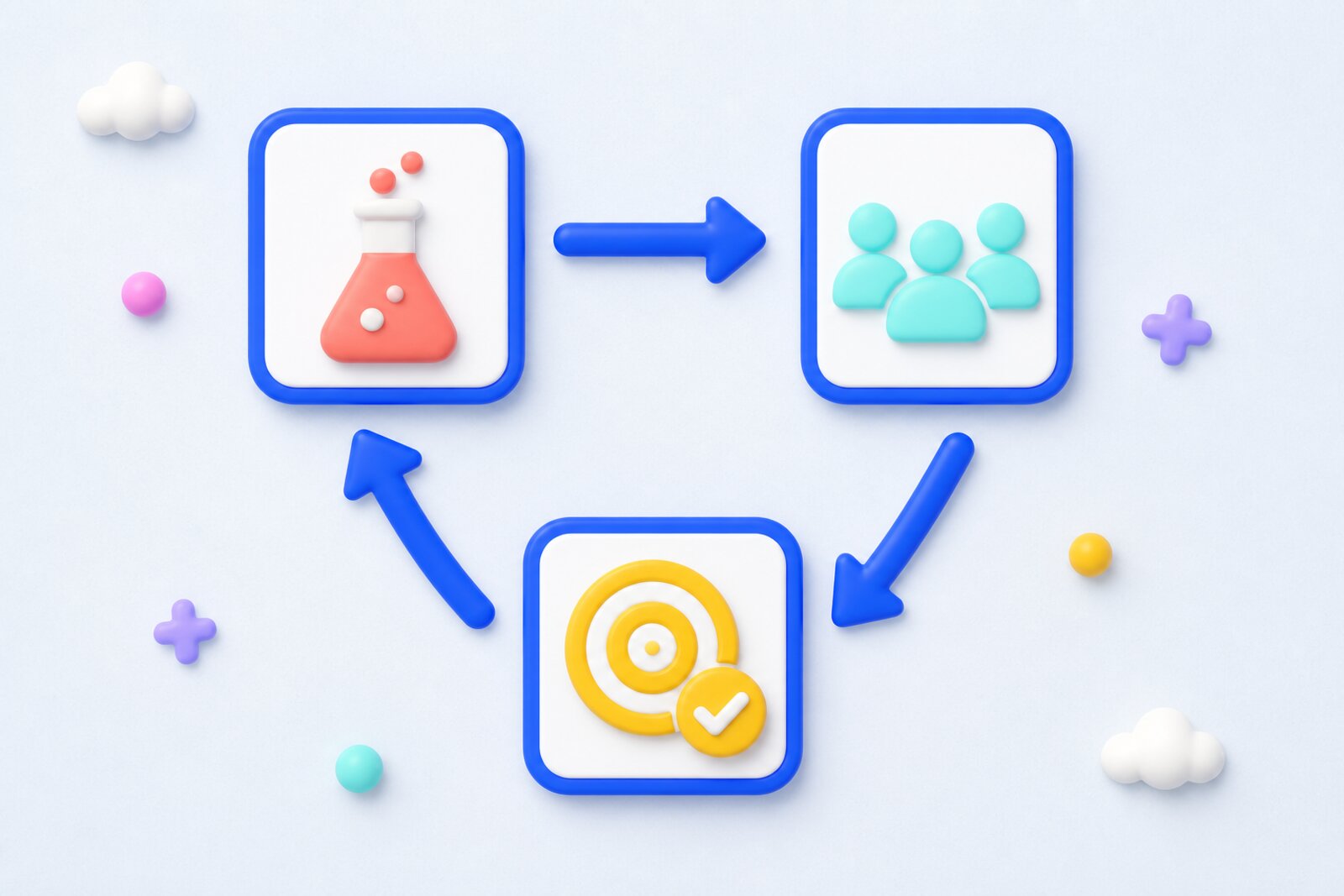
Doing growth hacking marketing means thinking about every stage of the customer journey, from start to finish, with an eye on every stage of the funnel.
The funnel is simply that — a funnel that users enter and paying customers leave. Here’s an example.

To do growth hacking marketing you have to think about these funnel stages:
- Acquisition
- Activation
- Retention
- Referral
- Revenue
We’ll go through each in turn.
Acquisition
Acquisition is the stage aimed at winning customers for your brand or your company.
It’s a very important stage, and there are many strategies for getting known and acquiring users potentially interested in your product or service.
Here you have to pay close attention, because there’s a risk of wasting budget bringing in users who aren’t genuinely interested in what you offer. There are many ways and channels for attracting prospects, and growth hacking lets you find the ones that work best, making the budget go further. That’s exactly the growth hacker’s job: finding a way to acquire users who are on target and genuinely interested in the products and services you offer — users who then become paying customers.
Wondering which channels and acquisition strategies growth hackers use?
There are many ways of doing acquisition. What a growth hacker has to do is analyse the target audience, test every channel available, and finally choose and commit to the ones that work best.
Here are some examples of channels you can use for acquisition:
- SEO: for years now people have said SEO is dead. Don’t believe them — it’s still enormously important. Anyone saying otherwise is simply not able to do it. If you want more depth on SEO, go to our SEO Academy.
- Content marketing: writing interesting content (optimized for search) is fundamental to acquiring users organically.
- SEM: if you don’t have time for SEO, SEM is a good shortcut. Use Google Ads for PPC campaigns, for instance.
- Affiliate marketing: a very good strategy to try, because it lets you run display advertising for leads or for sales. Meaning what? That you pay only when a user converts (fills in a form, requests information, subscribes to a newsletter, buys).
- Social media marketing: everyone uses social media now, so doing business without it is no longer an option.
- Email marketing: this works well for many kinds of business too, and it’s low-cost.
- Guest posting: find blogs or sites with influence in your field that have a following and quality content, and get them to publish the best article you’ve ever written. Quality is unquestionably fundamental.
- Inbound marketing: which took sales management to another level, practically replacing the salesperson. It’s a coordinated set of marketing that includes every technique described above.
- Using other businesses’ networks: one of the foundations of growth hacking. Being able to spot other businesses that already have a network of users who might be interested in your products is fundamental, because you can use their channels to reach those users. One of the most striking examples is Airbnb, which early in its history used Craigslist’s audience to grow. We’ll cover that in the lessons ahead.
Need a list of growth hacking tools?
Need tools to grow your business?
Want to use growth hacking for your clients and work out which tools are available?
No problem, we’ll give you the full list. FREE!
Request the free growth hacking tool list
Activation
Activation is the second stage to attend to if you want to do growth hacking marketing.
In the first stage, acquisition, we managed to bring a user interested in our products and services to our site, blog, store or landing page.
In activation the goal is to get that user to take an action — to make them convert.
Conversions might be:
- signing up to the site
- subscribing to the newsletter
- requesting information
In those cases the purpose, the goal and therefore the conversion is getting the user to leave an email address, which we then use to communicate with them and work on turning a user into a paying customer.
The goal could also be the sale. With an ecommerce store, for instance, acquisition brings in a user interested in the product, while in activation the goal is getting them to buy one of our products (while always bearing in mind how important it is to capture their email address — if they don’t buy, we’ll need it in order to get back in touch and work on turning them into a customer).
How do you capture users’ details, their email? Through:
- Contact forms
- Pop-ups
- Landing pages (we’d suggest A/B testing. Try different colours, try moving the call-to-action button, make other variations and see what works better).
One piece of advice: don’t try to sell or promote a product straight away. When you build a pop-up or a landing page, offer exclusive advice, offer visitors something interesting, or include promotional codes so the user has an incentive to leave you their email.
Retention
Retention is the third stage.
When a customer buys or converts on your site, do you think it ends there? Obviously not. You want that customer to stay with you and buy other products and services over time.
And that’s exactly what retention is about. You have to build a community of people loyal to your product, your service, your startup, your brand (does Apple ring a bell?) — with the aim of building a relationship of trust with customers so as to improve your chances of turning them into repeat buyers rather than one-time ones.
Always remember this: it costs seven times more to acquire a new customer than to keep an existing one.
From which you can see how much more sensible and profitable it is to hold on to the customers you have than to win new ones.
There are strategies for building customer loyalty; here are some:
- Use a CRM: this software gives you important data for shaping loyalty strategies. With a CRM you can concentrate on your best customers, offer them tailored deals, reward them before they go to a competitor, analyse satisfaction and stay in touch.
- Create interesting content to give your customers.
- Build a community of people talking about your brand, giving users a platform where they can interact with you and with each other.
- Thank and reward your valuable customers.
- Listen to what customers have to say, be empathetic, and talk with them (on social too) like a human being rather than a company.
- Win back customers you’ve lost: ask why they left, give them strong reasons to return, use testimonials they might trust, give them support and share solutions with them.

Referral
The referral stage matters a great deal too.
Your goal has to be growing your brand or your company as much as possible.
How?
Having a good product or providing a good service certainly helps, but sadly isn’t enough on its own. Even today word of mouth remains one of the best ways of growing a business.
Word of mouth has changed, though. We aren’t talking about a friend in a bar telling us about a product (or rather, not only that, because it matters too). We’re talking about techniques for generating controlled word of mouth through referral programmes and incentive schemes that lead a customer to spread your gospel, online especially.
Here’s some advice and a few referral techniques:
- The best way to get referrals is to give referrals. Build two-way referral relationships: send people to other companies you know and they’ll do the same for you.
- Ask customers to invite their friends at the moment they’re happy while using the product.
- Work with influencers in your field (influencer affiliation).
- Find the people who use your product most and are loyal customers and make them advocates for it.
- Give your customers your fullest attention, look after them, so that they always speak well of your brand.
- Offer your audience incentives for spreading the word on all the main social networks, rewarding them in various ways: money, holidays, mentions from significant brands.
- Be as specific as you can when you ask for a referral.
- Offer your service free, give value, and you’ll find it brings substantial results.
Revenue
In traditional marketing, revenue is always relegated to second place. Honestly, it’s hard to see why. Financial return is the basis of every business. Every business is created to make money.
The final goal of growth hacking marketing is generating revenue and profit.
How? Through analysis of the business model and the revenue stream, through valuing customers and their worth over time, and through cross-selling and up-selling strategies.
Here are some examples of strategies for improving earnings:
- Analyse how the business model works and improve it as far as you can.
- Correct the weak points according to what the data says. Always give full information, feed customers interesting content and improve their experience with you.
- Build a customer service programme that’s practical, fast and responsive.
- Spur the customer with time-limited promotions. The fear of missing an exclusive offer produces a considerable amount of engagement.
- Use strategic giveaways.
- Think about content upgrades for the segment your offer doesn’t tempt.
Doing it yourself, or with help
As you’ll have seen, building a growth hacking marketing strategy isn’t simple. There are many variables to weigh.
Which is why we’d suggest contacting an experienced growth hacker, asking for advice to point you the right way, or handing the whole job to them. Doing growth hacking marketing takes a great deal of knowledge, plus experience in knowing which techniques to use, how, for how long and under what conditions.
If you need help, we can give it. Alongside our Milan office we have one in London, where we’ve worked on growth hacking for many years and where we constantly experiment with new techniques and new tools.
Conclusion
In this lesson we’ve covered growth hacking marketing and gone through the stages of the funnel: acquisition, activation, retention, referral and revenue.
We’ve given you what you need to understand how to start, but you’ll have gathered that it takes considerable skill. As you’ll have seen, you can begin on your own, but an expert’s help will be fundamental.
Stay tuned to your favourite Growth Hacking Academy.
In the lessons ahead we’ll go deeper into the various parts of the growth hacking funnel, cover growth hacking courses, look at success stories and plenty more.
Want advice on growing your business? Get in touch! With growth hacking we’ll work out and implement the best strategy for reaching your goal.
Want to become a growth hacker? Get in touch! We’ll find the right course for you.
Want to ask us something or just talk to us? Get in touch! That’s what we’re here for.